Showing posts with label Technique. Show all posts

May 18, 2015

Self-Publish Your Book

A colleague and friend, Jessica Bell, has had her Facebook page suspended for some mystical - probably mythical - reason, just at the point where she has a new book published. So myself and several other colleagues are publishing her pitch for the book so that she can get at least some promotion while her FB page is down. Here's the pitch:

Are you ready to self-publish your book, but dreading the massive learning curve? Well, there’s no need to dread it anymore!

This 6th installment of the bestselling
Writing in a Nutshell Series, will not overwhelm you with all information available—it will tell you exactly what you need to know, without the faff, by following a foolproof, cost-efficient, time-efficient, extremely easy-to-follow, step-by-step self-publishing method.

Want to go from manuscript to a professionally published book within one week? Then this is the book for you.

You’ll learn how to: prepare your manuscript in Microsoft Word, design your paperback and eBook cover, prepare your front/back matter and blurb, format your paperback interior & eBook, proofread your designed pages, register with desired retailers/distributors, export your eBook to a retail-ready file and upload your paperback and eBook to retailers/distributors.

Not only will this book save you time and money, but it will also save you from inevitable stress. What are you waiting for? Grab a copy of Self-publish Your Book today! 
Jessica's an excellent writer, musician and book designer and I'm sure if you're entering the hazardous waters of self-publishing that this book will be a great boon. Rush out and buy it now! (Or stay in and buy it, I don't care which.)


March 08, 2015

Re-reading Chandler

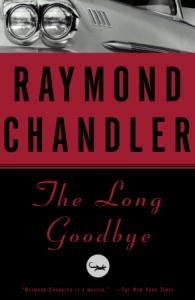
Some years after reading Raymond Chandler’s The Big Sleep and Farewell My Lovely, I thought it was about time I read his other most famous novel, The Long Goodbye. I had fond memories of the ‘reworking’ of the story in Robert Altman's 1973 film starring Elliott Gould and wondered how Chandler’s style would stack up against some of the modern crime writers I’d been reading in the last few years.
The Long Goodbye shows Philip Marlowe becoming involved in what appears to be two separate cases but which wind up being connected. The first is his growing friendship with Terry Lennox, who turns out, it seems, to be the murderer of his rich socialite wife. After the friendship ends with Marlowe driving Lennox to Mexico to escape a possible charge of murder, the second storyline picks up: Marlowe is hired by Eileen Wade, the wife of famous novelist Roger Wade, to find her husband, who is a drunk and has either gone off on a bender or is drying out somewhere in a sanatorium. These two plot-lines converge in more violence in which Marlowe is implicated but doesn’t participate.

October 13, 2014

Triumphant triumvirate - Lehane, Atkins, Sandford.

I've recently read three crime novels that remind me - if I needed it - why crime writing is such a vigorous genre.

First I read Dennis Lehane's The Drop, which is a novel based on an earlier short story and which has been made into a film starring Tom Hardy and the great James Gandolfini. Effectively, it's the old story about the worm turning - someone who is put-upon finally deciding that enough is enough and finding the strength to assert themselves. The difference here is that the hero, although quiet and unassuming, was once part of a gang that exercised a violent rule over a part of Boston.

September 17, 2014

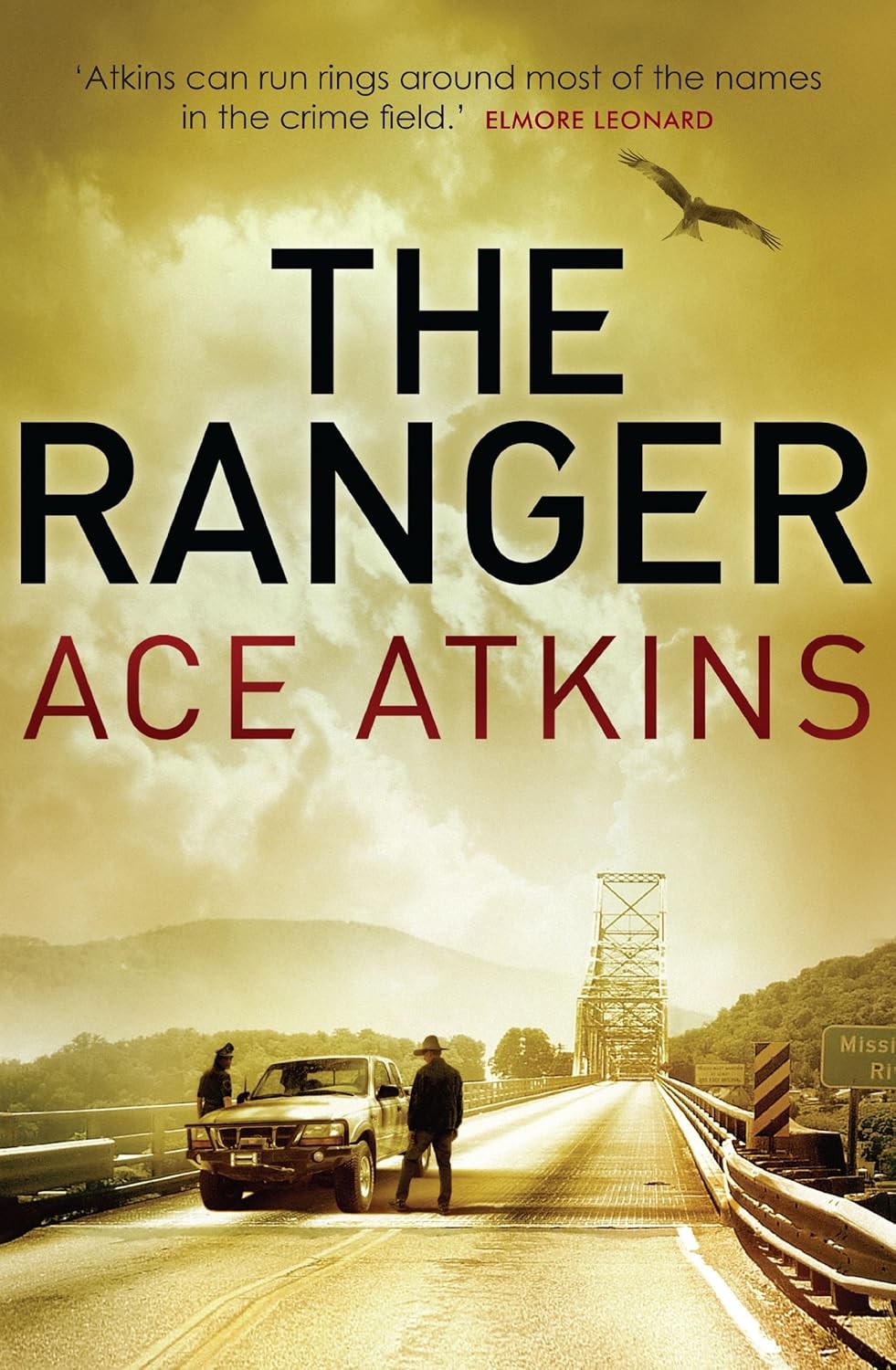
Ace aces it - The Ranger hits a sweet spot.

I try to keep a handle on new American writers because I'm always on the lookout for people to learn from.

Ace Atkins surprises me - not because he's good, which he is - but because he's written half a dozen or more books and I hadn't stumbled across him or his work until a few weeks ago.

The Ranger is the first book in the 'Quinn Colson' series. Colson is a Ranger - a high-class Special Forces soldier - who returns at the beginning of the book from seeing action in Afghanistan. You get a sense of the man in the opening paragraph:
Quinn headed home, south on the Mississippi highway, in a truck he’d bought in Phenix City, Alabama, for fifteen hundred, a U.S. Army rucksack beside him stuffed with enough clothes for the week and a sweet Colt .44 Anaconda he’d won in a poker game. He carried good rock ’n’ roll and classic country, and photos from his last deployment in Afghanistan, pics of him with his Ranger platoon, the camp monkey “Streak” on his shoulder, Black Hawks at sundown over the mountains. 

Look at the detail in that - Mississippi highway, second-hand truck, 1500 dollars, US Army rucksack, Colt .44 Anaconda, poker game ... concluding with his last deployment in Afghanistan and the Black Hawks in the background. That opening paragraph does so much work in just three sentences, giving us some backstory, some of his personality and even some of his skills ('his Ranger platoon'). We don't get five paragraphs of detailed explanation of who he is, where he's come from and what he can do. We get three packed sentences.

August 07, 2014

German mysteries

The Dark Meadow is by a writer new to me, Andrea Maria Schenkel. She comes trailing plaudits as the first writer to win Germany's Crime Prize two years running and with her books translated into over twenty languages.

Schenkel seems to have developed a much-admired style that is minimalist and bleak, unfolding her stories in short chapters, each from the perspective of a different character, including the victim. The Dark Meadow, in a nicely-produced edition from Quercus, tells the grim story of a young single mother who returns to her family home having failed to find a life for herself beyond the village limits. It's 1947 and life is hard for a young woman with a child and living with parents who struggle to feed themselves, never mind another two mouths. The tale revolves around what happens to her, her parents and the various subsidiary characters who are witness to, or involved in, the murder itself.

August 03, 2014

The mastery of James Lee Burke

I've said many times before that James Lee Burke is probably the finest writer working in America today. His latest book, Wayfaring Stranger, is not going to dissuade me from that opinion.

Burke has had two strands to his fictional world - one of them involves the one-time police officer and private detective, Dave Robicheaux, who has featured in the majority of his novels over the last 30 or so years. The other strand plays with the fictional Holland family - apparently a meditation on Burke's own family, the Hollans. He has gone backwards and forwards in time with this family, and in Wayfaring Stranger we alight just before, during and after the Second World War.

Wendel Holland lives with his slightly detached mother and his grandfather (the hero of an earlier Burke novel), and at some point in the early 1930s has a run-in with Clyde Barrow and Bonnie Parker, a meeting which colours and illuminates his adult years.

July 31, 2014

5 Signs Crime Fiction is Still Evolving - A Guest Post by Rebecca Gray

Today I'm pleased to publish a guest post by Rebecca Gray, who writes about real crime at backgroundchecks.org. Her comments on the impact of technology and new media have certainly made me think about my own practice as a writer in the modern world. Please add any comments you wish or write to Rebecca directly at the email address below.

image courtesy ponsaluk

5 Signs Crime Fiction is Still Evolving

Rebecca Gray

Crime fiction as a genre dates back to the 19th century, when Poe chilled readers with "The Murders in the Rue Morgue" and Conan Doyle gave birth to the archetypal detective in Sherlock Holmes. You can still cast new writing in that classic mold, but today's crime fiction continues to expand its reach, merging with different fields like science fiction and fantasy or exploiting the possibilities of new media.

Changes in modern culture and technology are driving these changes in crime fiction. The plots of old classics in detection like The Murder of Roger Ackroyd and The Red House Mystery depend on the lack of formal methods for processing a crime scene we now use routinely, so in order to produce similar novels today, a writer would have to craft a story deliberately excluding modern techniques and solutions.

June 20, 2014

Marlowe rises from the grave ... then sinks into it again.

It's been called literary ventriloquism - the ability to write in the 'voice' of another writer. That idea, once a jeu d'esprit, has now become big business. I guess it began with Kingsley Amis writing a James Bond novel - Colonel Sun - after Fleming's death, following his own critical examination of the Bond phenomenon, The James Bond Dossier. Subsequently, Wikipedia provides a frighteningly long list of Bond books written by other writers, culminating most recently with William Boyd's poor effort, Solo.

Recently, the Booker-Prize winning author John Banville, writing in his guise as Benjamin Black, has produced a Raymond Chandler 'continuation', The Black-Eyed Blonde, apparently a title that Chandler had earmarked in his notes for future use. This follows a couple of attempts at Chandler follow-ons from the prolific and often excellent Robert B. Parker - Poodle Springs and Perchance to Dream, neither of which met with much approval from hard-boiled fans. But then, expectations are high when it comes to Raymond Chandler.


February 06, 2014

James W Hall - the brightness of Going Dark

James Hall is a poet and professor of literature, and this literary background informs all of his books. Hit List was an entertaining examination of what exactly best-sellers did to become best-sellers, and Hall's knowledge of structure, character and dialogue are, as usual, well to the foreground in his tenth Thorn book, Going Dark.

January 10, 2014

Michael Connelly - is he guilty?

A long absence on this blog, folks, because I've been finishing a (non-crime) book and, you know, having Christmas and New Year and stuff.

So what's to report?

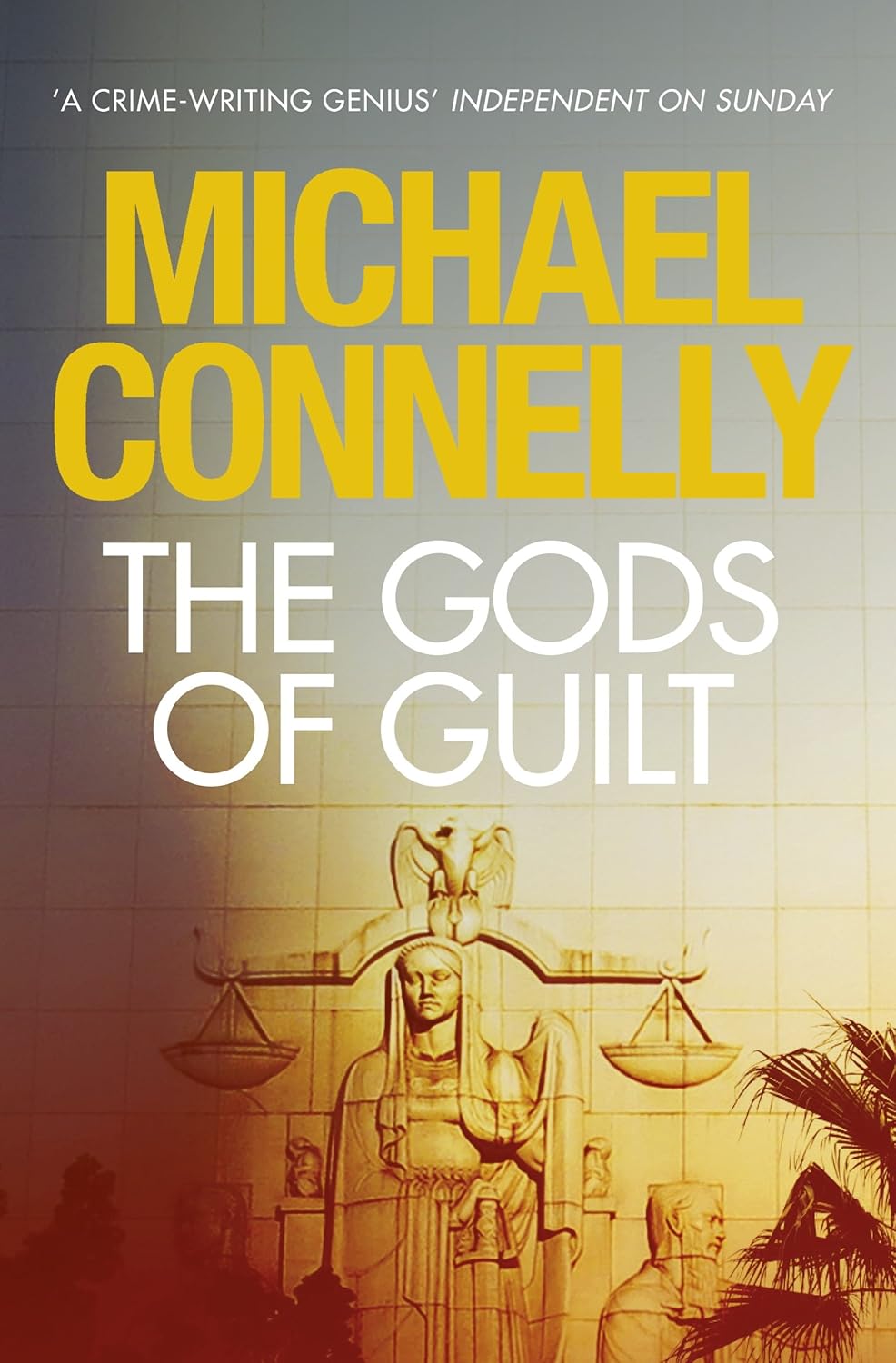
Well, I've recently read Michael Connelly's latest Mickey Haller book, The Gods of Guilt, and thought it was pretty terrible, actually. As with his Harry Bosch series, Connelly seems to be running out of steam. He relies way too much on exposition and not enough on placing us in the middle of the action. This is always a danger with court-room dramas, and writers have two possible options - one is to make the out-of-court story interesting in itself; the other is to make the examination of witnesses compelling and revelatory.

Strike out on both counts here.

Haller's storyline when he's not in court is essentially to track down and talk to witnesses. As we might have expected, he falls for an ex-prostitute who suddenly, without further ado, becomes his girlfriend and then vanishes into the background. There's a lot of time spent setting her up, and Haller's relationship to her ... but the next thing we know he's waking up in her bed and driving home. How did that happen? And what are the consequences? And what do his team members think of his sudden shacking up with an ex-hooker and potential witness in the current case? All it does is attempt to show Haller as a human being, but it actually portrays him as someone shallow.

The other element of his out-of-court activity is his non-relationship with his daughter, who's moved away from home and is living with mom. For most of the book Haller tries to get her involved in his life but she ignores him. And in the end, we don't care. We don't see or hear her and so the relationship has no life and we can barely feel his pain. The time he spends on hillsides watching her through binoculars as she plays field hockey just seems creepy. I suppose it's supposed to act as a counterpoint to Harry Bosch's relationship with his daughter but it doesn't work.

What can't be ignored, either - and hasn't been by many review critics - is the way the death of one of his team members is almost brutally ignored. The person dies (no spoilers) ... cut to next part, a couple of months later. No aftershocks, no emotional soul-searching, no change in behaviour. Given the way he used to be able to handle this kind of personal trauma in the Bosch series, it's a severe disappointment that he can't really deal with it more sensitively here. As a result, the book becomes eminently plot-driven, and the characters lose their reality - after all, they're just pawns in Connelly's hands and they have to do what he wishes. (There's a strange semi-postmodern game that he's playing with readers these days, too ... he has his characters refer to films made of earlier 'cases' - for Bosch, Blood Work, made into a film starring and directed by Clint Eastwood; for Haller, The Lincoln Lawyer, starring Matthew McConaughey. Their references to these films create a weird virtual world in which fictional characters talk about real films made from fictions. You feel a bit like Alice going down the rabbit-hole and not knowing which way is up.)

The second option open to legal thriller writers is to build up the courtroom drama itself - something at which Scott Turow, for example, excels. In this book, unfortunately, Connelly shows us Haller questioning a lot of witnesses on the stand, but he has to keep telling us what's important about the testimony, because he assumes we don't understand. OR, what happens is so predictable (again, no spoilers) that we sigh when the plot-twist arrives. There is a major turn at the end of the trial, but this is so extreme and, really, so out-of-character for the person involved, that it just seems silly.

A symptom of how badly Connelly has misjudged this book is in the title itself: The Gods of Guilt. Haller tells us this is his name for the jury in a trial, because they're the ones who'll determine whether the accused is guilty or not. Well, OK ... but it's such a crap name for them I can't imagine anyone speaking the words out loud. But Haller does, on several occasions, and it just sounds lame. He'd just call them 'the jury', surely? Calling them Gods does them no favours and doesn't elevate the book to any kind of meditation on the justice system and its good or bad points, which is perhaps what he was intending.

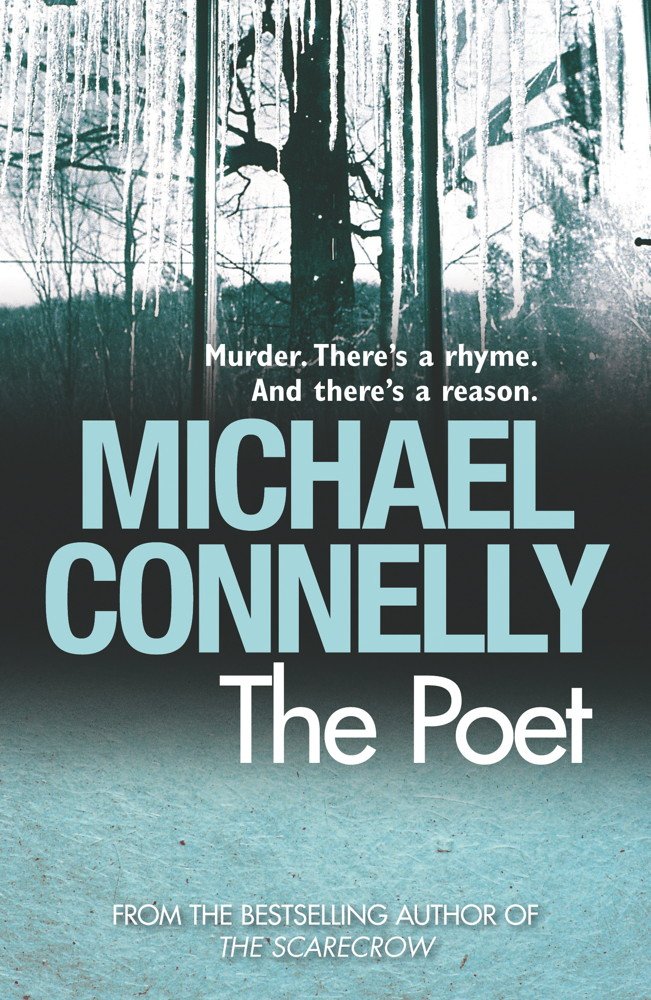
I used to really look forward to a new Connelly. Now I'm starting to open the books a little more gingerly and hope he can get back to the standard of The Poet or The Narrows. Though I'm not holding out much hope.


October 21, 2013

Online Crime-writing Workshop

I don't usually respond to advertising requests - well, all right, I do - but I thought this was interestingly and directly relevant to the topic of this blog, which is about how crime writers do what they do.

Carrie King from WritersWebTV has written to me asking if I would promote this event and I think it's interesting enough to warrant further publicity. Rather than try to paraphrase it, I'll just paste the main text of her email:

Crime’s best writers give you the scoop

Best-selling crime authors Ken Bruen, Jane Casey, Declan Hughes and Niamh O’Connor will be joining WritersWebTV on October 30th, ready to arm aspiring authors with all the best writing tips, tricks and methods at the upcoming workshop, Crime Pays: Writing Crime Fiction.

Multi-award-winning Ken Bruen - the author of the Jack Taylor series which has become a TV hit starring Iain Glen – will talk through writing great hook-lines and how to develop characters across a series. Jane Casey, author of the Maeve Kerrigan series of crime novels will guide participants through the basics of narrative and plot. Declan Hughes - author of the Ed Loy PI series - rigorously plans his writing and he’ll be giving his insights on how to plan for your novel while being open to new sources of inspiration. Niamh O’Connor, one of Ireland’s leading crime journalists, will lead us through the research process and crack the code of juggling family, writing and a day-job.

This free-to-watch-live, online workshop will cover all aspects of crime fiction and viewers will be able to interact with those in studio to help them develop their skills. WritersWebTV has developed a world-first innovation in online education for writers by providing livestreamed interactive workshops to a global audience, featuring Irish and international best-selling writers and industry professionals.

The one-day workshops are streamed live from a multi-camera broadcast studio in Dublin. Bestselling authors interact with an in-studio audience of aspiring writers, who present their work for critique. Online viewers can communicate with those in the studio using Twitter, Facebook or email. They can ask a question, take part in a workshop exercise, comment online and benefit from on-screen feedback from the authors in-studio.

Led by experienced workshop facilitator Vanessa O’Loughlin, founder of writing.ie, the panel will consider the key elements of fiction writing and furnish viewers with tips, advice and actionable insights to help them improve their writing and get it on the path to publication.

Upcoming courses include Crime Pays: Writing Crime Fiction on Wednesday, October 30th, and Getting Published on Saturday, November 9th, with plans in motion for courses in 2014.


Viewers can watch the full one-day workshops for free when they watch them live. If they want to download a workshop or watch it later, they can pay to keep the course.

For more information, contact:
Carrie King
WritersWebTV
Tel: +353 1 2076476
Mob: +353 87 9918963

July 25, 2013

Stephen Dobyns - unsung hero?

I've been meaning for a while to write about Stephen Dobyns' new book, The Burn Palace. He made his name originally with a series of books set in Saratoga and dealing with the horse-racing set in that part of the US, featuring his laid-back detective, Charlie Bradshaw. He later expanded his purview with The Church of Dead Girls and Boy in the Water. He is also a poet.

The Burn Palace is set in a fictional Rhode Island township, Brewster, and seems initially to be a crossover novel dealing with the supernatural and possibly vampirism or werewolf-ism (?) However, as the main protagonists set about their police investigation, it becomes clear that what appears to be supernatural is common-or-garden evil-doing, and that the usual suspects - the good and the great of the local community - are just in it for the money.

June 03, 2013

An interesting site

For those of you who like reading about how crime writers work (and I guess you wouldn't be reading this site if you weren't), then can I point you to an interesting blog by Scottish writer Tony Black. He's just published a collection of interviews with other crime writers, including Ian Rankin and William McIlvanney, and one of my favourites, Andrew Vachss, than whom they don't come any harder boiled.

You can see the blog here, from which you can buy the book.


May 31, 2013

Dan Brown's Inferno ... putting us all through Hell

I'm not going to write much about this because I don't want to give him the publicity he doesn't need (as if MY critique is going to have any impact!)

Put simply, this is a terrible book. The Da Vinci Code was badly-written but at least the plot was propulsive. The Lost Symbol was in the same vein and made you want to know what happened in the end. Inferno is just ... boring. I've been reading it for a week now and I'm only half-way through. There's no compulsion to finish it at all. I will, just to find out how it ends. But the 'big reveal' that Brown specialises in is already becoming clear, so there's no expectancy there. The main assassin is dead (like the albino monk in TDVC, but not as hardy). And to be honest I JUST DON'T CARE.

April 16, 2013

Robert Littell - The Company he keeps

There seems to me to be three titans in the world of espionage thrillers - John le Carre, Charles McCarry and Robert Littell. The first two of these were involved in the world of espionage in some form (though le Carre plays down his active involvement) while Littell was a close observer of the cold war as a journalist for Newsweek for many years.

After the early books le Carre went off the boil, for me, but McCarry and Littell have improved over time. McCarry has a poetic tone together with an allusive, indirect style that is reminiscent of Martin Cruz Smith. Littell, though not so poetic, can be equally indirect - almost misleading - in the way he constructs his intricate stories of failed belief and betrayal.

November 27, 2012

Lee Child - still reaching

In an alternative universe, I could have been Lee Child. We're almost exactly the same age and were brought up in Coventry. I suspect, however, that he's brighter than me. He got himself a job in TV production and when he was 'let go' he moved to America to write thrillers, which he's done to staggering success.

When you come across your first Jack Reacher book it's a hell of a ride. Reacher is logical to the nth degree and can think his way out of almost any situation. And when he can't, then he's 6'5" tall and has hands the size of plates - so he can batter his way out.

And that's it ... that's the plot of his last seventeen books. Reacher travels the country with a toothbrush and a credit card, buying clothes when he needs them, falling into dangerous situations every couple of months or so. He finds some bad guys and some good guys and makes everything OK. Crucially, these situations are usually somewhere out in the American sticks, where Child can create the world in which Reacher can move and have his being.

September 18, 2012

Is James Lee Burke the greatest crime writer alive?

Well I guess I've nailed my colours to the mast with that heading ... I am definitely a fanboy when it comes to James Lee Burke.

His latest book is Creole Belle, and continues the story of his bruised and battered cop hero, Dave Robicheaux and his friend Clete Purcel. In this instalment of their ongoing history, Dave is trying to find a girl who came to him while he was recovering from the wounds received at the end of the previous novel, The Glass Rainbow. He doesn't know at first whether the appearance of the girl was a medically-induced vision or whether she was in fact real. She leaves him an iPod with music already installed, but when others try to play the particular tracks on which she sings, they can't find them. This captures one of Burke's strengths - the ability to create an atmosphere in which reality and sur-reality intermingle. Robicheaux's consciousness is one in which the present and the historic past constantly mingle, so that his actions are always tinged with a recognition of their provenance in the past.

September 03, 2012

What makes great dialogue?

A couple of weeks ago I published something on Amazon's 'So you'd like to ... ' function. This is an opportunity for anyone to make out they're an expert on anything under the sun and then tell others what to do. Never one to pass up that kind of chance, I thought I'd put something together on dialogue, which is a feature of writing and reading that I spend a lot of time thinking about. Here's the piece - it's a bit long for a blog post, so settle down and get a cup of tea or coffee first ...

August 28, 2012

A chip off the old Burke?

Alafair Burke is the creator of two series of books featuring strong women - the Ellie Hatcher series and the Samantha Kincaid series. Never Tell belongs to the former, where Ellie Hatcher is a police detective in New York investigating the suicide - or was it murder? - of a young girl.

Like Peter Leonard in my post about his book, Burke labours under the weight of a famous writing father - in this case, James Lee Burke, one of the most celebrated authors - never mind crime authors - in the US. Where Leonard went into the past to escape comparison with his father's current work, Burke has traveled into the big city, thus separating herself from her father's association with rural Louisiana and Montana.

July 23, 2012

The game of the name - Peter Leonard's escape into the past.

Peter Leonard is the son of the Great Elmore Leonard, and in case we were in any doubt, there's an encomium from his dad as the preface to Voices of the Dead. In it, Leonard senior praises Leonard junior for having read his Ten Rules of Writing, especially the one about leaving out the parts that readers find boring.

Well, that's certainly true here. Voices of the Dead moves along like a steam train, barely pausing for breath (if a steam train breathes ... ). Set initially in 1971, it tells the story of Harry Levin, a Detroit scrap metal merchant, who finds himself hunting down an ex-Nazi who he remembers from the war, and who is still roaming the world killing Jews who might incriminate him. The story moves back to Dachau in 1942 for some key scenes that explain Harry's actions and give context, perhaps, for contemporary readers who don't know what went on in the concentration camps.