Showing posts with label Elmore Leonard. Show all posts

September 17, 2014

Ace aces it - The Ranger hits a sweet spot.
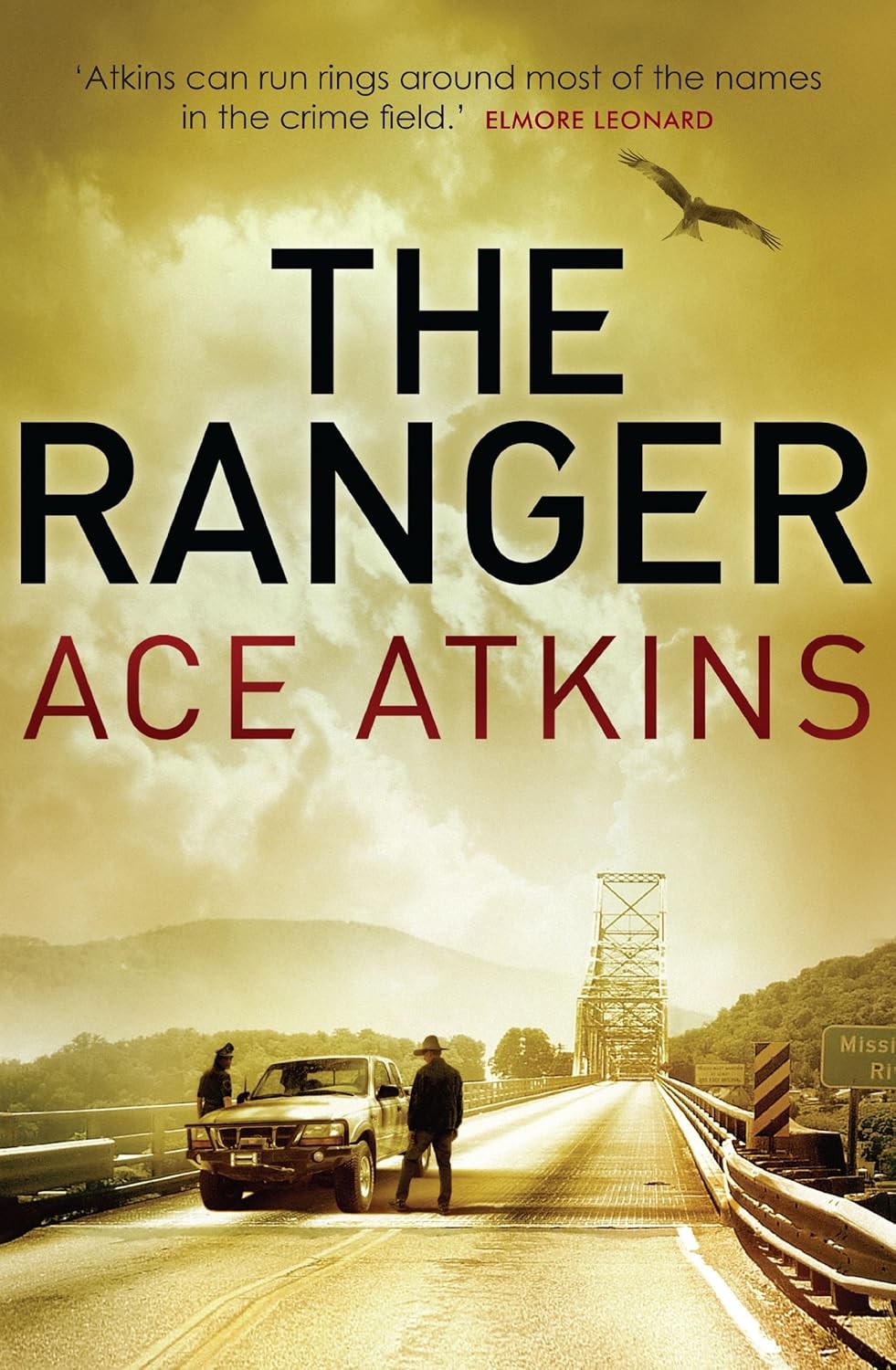
I try to keep a handle on new American writers because I'm always on the lookout for people to learn from.

Ace Atkins surprises me - not because he's good, which he is - but because he's written half a dozen or more books and I hadn't stumbled across him or his work until a few weeks ago.

The Ranger is the first book in the 'Quinn Colson' series. Colson is a Ranger - a high-class Special Forces soldier - who returns at the beginning of the book from seeing action in Afghanistan. You get a sense of the man in the opening paragraph:
Quinn headed home, south on the Mississippi highway, in a truck he’d bought in Phenix City, Alabama, for fifteen hundred, a U.S. Army rucksack beside him stuffed with enough clothes for the week and a sweet Colt .44 Anaconda he’d won in a poker game. He carried good rock ’n’ roll and classic country, and photos from his last deployment in Afghanistan, pics of him with his Ranger platoon, the camp monkey “Streak” on his shoulder, Black Hawks at sundown over the mountains. 

Look at the detail in that - Mississippi highway, second-hand truck, 1500 dollars, US Army rucksack, Colt .44 Anaconda, poker game ... concluding with his last deployment in Afghanistan and the Black Hawks in the background. That opening paragraph does so much work in just three sentences, giving us some backstory, some of his personality and even some of his skills ('his Ranger platoon'). We don't get five paragraphs of detailed explanation of who he is, where he's come from and what he can do. We get three packed sentences.

August 22, 2013

The Great Elmore Leonard, RIP

I first started taking crime fiction seriously when I began reading the books of Elmore Leonard. A friend had brought a couple back from America in the early eighties and loaned them to me. I'd just begun to include American crime fiction as a staple part of my leisure reading, beginning with George Higgins and - another American import who wasn't published in the UK - K.C. Constantine and his Mario Balzic novels. Shortly afterwards came my introduction to Robert Parker's Spenser, which sent me back to the Lew Archer novels of Ross Macdonald ... and on and on.

These were all great books to read - involving, swift-moving, funny, great dialogue ... but Elmore Leonard stood out even from this pack. His style involved you immediately in the action and in the thought processes of his main characters. Here are some first lines:

"The night Vincent was shot he saw it coming."—Glitz (1985)

"Chris Mankowski's last day on the job, two in the afternoon, two hours to go, he got a call to dispose of a bomb."—Freaky Deaky (1988)

"The Blackbird told himself he was drinking too much because he lived in this hotel and the Silver Dollar was close by, right downstairs."—Killshot (1989)

"Dale Crowe Junior told Kathy Baker, his probation officer, he didn't see where he had done anything wrong."—Maximum Bob (1991)


August 06, 2013

Get well, Elmore

The Great Elmore Leonard is in hospital having suffered a stroke a week ago.

I'm sure all those who've read his books or seen films made from them (e.g  Get Shorty, Jackie Brown, Hombre) wish him all the best.


June 25, 2013

Ra-Ra Florida!

I'm just reading Carl Hiassen's latest book, Bad Monkey.
A full report later. It continues his tradition of showing the underbelly of life in the Sunshine State, though interestingly there's more focus on a romantic relationship this time, and less concern with describing the antics of comic heavies.

 Coincidentally, the field of crime writing in Florida is covered in Adam Gopnik's article in The New Yorker magazine this month. Every two years, when Hiassen releases a new book, we get a plethora of articles about his work, or the work of his colleagues. But I'm not complaining, because Lawrence Shames, James Hall, Tim Dorsey and Charles Willeford are among my favourite crime writers, so the more there is to read about them, the better.

Apart from Miami Blues, from Willeford's book, though I'm struggling to think of a good film made from one of these books. There was an awful film of Hiassen's Striptease, but surely someone could make a film of one of James Hall's Thorn books - they're exciting, deal with real relationships, have something to say about the rape of the environment and have a great leading role for a tough-looking but relatively placid actor. Someone like Mathew McConaghey, perhaps, or even Ryan Reynolds. They'd have to grow long hair, though.

I think there have been films from a couple of Elmore Leonard's books, but nothing substantial.
In other news, Actress is starting to sell some copies. The price is currently reduced to $0.99 till the end of the month, so this is the time to buy! Click here for the Amazon.com Kindle version.

July 23, 2012

The game of the name - Peter Leonard's escape into the past.

Peter Leonard is the son of the Great Elmore Leonard, and in case we were in any doubt, there's an encomium from his dad as the preface to Voices of the Dead. In it, Leonard senior praises Leonard junior for having read his Ten Rules of Writing, especially the one about leaving out the parts that readers find boring.

Well, that's certainly true here. Voices of the Dead moves along like a steam train, barely pausing for breath (if a steam train breathes ... ). Set initially in 1971, it tells the story of Harry Levin, a Detroit scrap metal merchant, who finds himself hunting down an ex-Nazi who he remembers from the war, and who is still roaming the world killing Jews who might incriminate him. The story moves back to Dachau in 1942 for some key scenes that explain Harry's actions and give context, perhaps, for contemporary readers who don't know what went on in the concentration camps.

March 24, 2012

Moving the story on

I'm reading a long short-story by The Great Elmore Leonard at the moment - a continuation of his stories about Carl Webster, the Hot Kid, who is some kind of federal agent. The series started before WWII, but the current story is set towards the end of it, with Carl investigating the alleged suicide of a German prisoner-of-war in a camp in the US.

One of the reasons Elmore Leonard is so great is because he doesn't hang around. He gives you just enough physical description of locations and people so that you have a general idea of where you are, but he lets the dialogue do the rest. This is a scene where Carl is interviewing a waitress who has met a German P.O.W. who continually escapes his prison but then gives himself up when, it seems, he gets bored. Carl spends a good part of the story investigating this prisoner, Jurgen, because he feels there's something going on that he doesn't yet understand. Norma, the waitress, describes the moments before Jurgen was last arrested in her cafe: